
What Should Your Commercial Property Exterior Cleaning Checklist Include in 2026?
Last Updated: October 26, 2026
Quick Summary
A comprehensive commercial property exterior cleaning checklist should include windows and glass surfaces, pressure washing for building facades and concrete, gutters and drainage systems, roofing inspections, concrete and walkway maintenance, and landscaping grounds care. Commercial property exterior cleaning protects your investment, maintains professional appearance, and manages liability risks from slip hazards and contamination.
- Windows may need weekly cleaning in high-traffic retail areas, monthly for upper-level offices, and more frequent cleaning in coastal salt spray environments.
- Pressure washing removes dirt, grime, mold, and algae from hard surfaces like building facades, entryways, loading docks, and exterior walls.
- Seasonal checklists align maintenance with weather patterns: spring debris removal, summer algae monitoring, fall drainage prep, and winter salt damage documentation.
- Keep service records for at least three years including contracts, invoices, work orders, inspection reports, and photos organized by property location.
- Concrete in high-traffic areas requires more frequent pressure washing than building facades, and painted surfaces need less aggressive cleaning than bare concrete or brick.
Table of Contents
- What to Include in Your Commercial Property Exterior Cleaning Checklist
- Developing a Commercial Property Seasonal Maintenance Checklist
- Creating a Commercial Property Cleaning Schedule That Works
- Your Commercial Parking Lot Cleaning Checklist
- Building a Commercial Pressure Washing Maintenance Plan
- Risk Assessment, Safety Controls, and Service Verification
- Scheduling Your First Commercial Property Exterior Cleaning Assessment
- Frequently Asked Questions
What to Include in Your Commercial Property Exterior Cleaning Checklist
A comprehensive commercial property exterior cleaning checklist protects your investment and maintains professional appearance.
Windows, Glass, and Transparent Surfaces
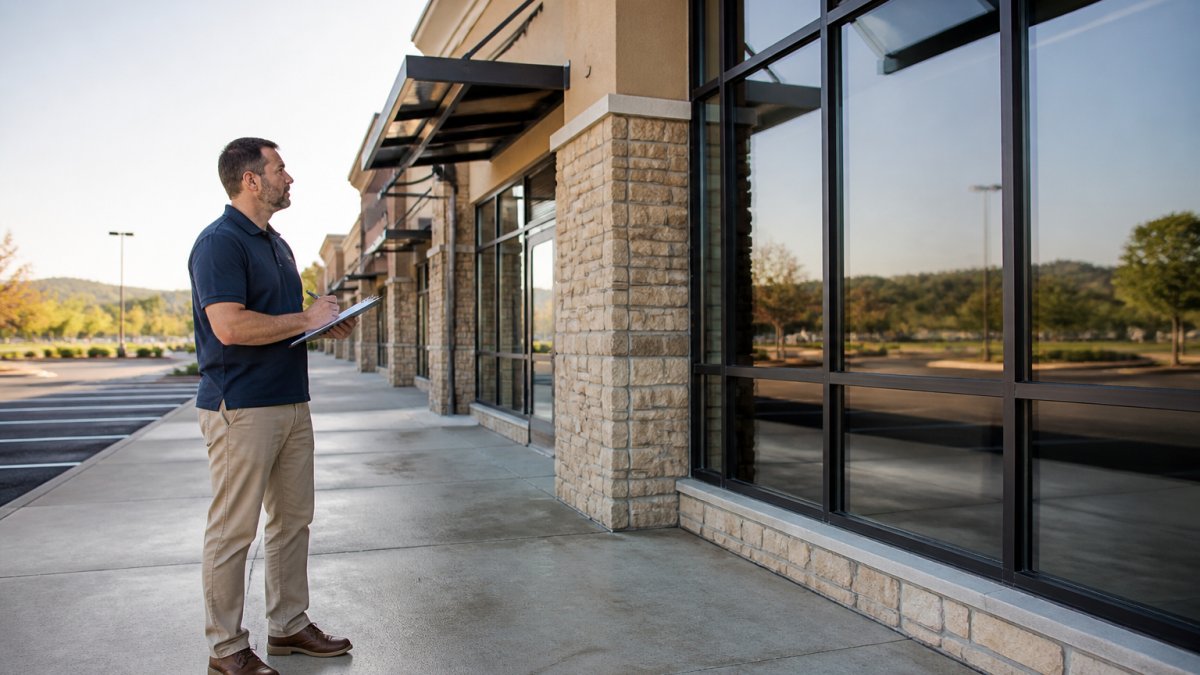
Window cleanliness shapes how customers perceive your property before they step inside. Cover interior and exterior glass, storefront windows, glass doors, and skylights.
Frequency depends on location and weather exposure: high-traffic retail entrances may need weekly cleaning, upper-level office windows monthly, and coastal salt spray accelerates buildup.
Pressure Washing and Surface Restoration
Pressure washing removes dirt, grime, mold, and algae from hard surfaces and restores their appearance. Identify all pressure-washable surfaces: building facades, entryways, loading docks, and exterior walls.
Gutters, Downspouts, and Drainage Systems
Document gutter condition, debris type, and visible damage. Rust, corrosion, or separation from fascia boards signals that gutter replacement should move onto your capital maintenance plan.
Roofing and Weather Protection
Note visible damage, missing shingles, or flashing issues to inform roof replacement timing and prioritize capital repairs.
Concrete, Walkways, and Slip Hazard Management
Concrete deterioration and slip hazards create liability exposure. Address all concrete surfaces: sidewalks, parking lots, loading areas, and entryway pads.
Landscaping and Grounds Maintenance
Document seasonal landscaping needs: spring debris removal and bed prep, summer growth and pest management, fall leaf removal and drainage prep, and winter snow removal coordination by climate.
Developing a Commercial Property Seasonal Maintenance Checklist
Seasonal checklists align maintenance with weather patterns and property usage, since each season brings different cleaning priorities.
Spring Preparation and Inspection
Check landscaping for winter damage: prune dead branches, clear planting beds, assess irrigation, and fix drainage before heavy spring rains.
Summer Deep Cleaning and High-Traffic Management
Monitor concrete for algae and mold accelerated by warm, humid conditions, address oil stains before they set, and inspect landscaping for pest and irrigation issues intensified by heat.
Fall Debris Removal and Drainage Prep
Inspect roof drainage and verify that gutters and downspouts are clear and functioning properly. Test drainage systems to ensure water flows away from building foundations. Address any drainage issues before winter weather arrives.
Winter Protection and Safety Measures
Document salt damage to concrete, landscaping, and metal surfaces. This information helps you plan spring repairs and informs decisions about alternative de-icing products for future winters.
Creating a Commercial Property Cleaning Schedule That Works
A realistic cleaning schedule balances maintenance needs with budget constraints and operational disruptions. Customized cleaning plans for properties provide complementary guidance to support your scheduling decisions. The schedule should specify frequency for each surface type and establish clear responsibility and documentation procedures.
Frequency Guidelines by Surface Type and Traffic
Material type affects frequency decisions. Concrete in high-traffic areas requires more frequent pressure washing than building facades. Painted surfaces need less aggressive cleaning than bare concrete or brick. Document your baseline frequency for each surface type, then adjust based on actual soiling patterns observed over several months.
Documenting and Tracking Completed Work
Use this documentation to refine your schedule. If an area consistently requires cleaning more frequently than your current schedule allows, adjust the frequency. If an area remains clean longer than scheduled, extend the interval. Data-driven scheduling optimizes your maintenance budget.
Your Commercial Parking Lot Cleaning Checklist
Parking lots present unique maintenance challenges combining high traffic, oil contamination, weather exposure, and safety hazards. A comprehensive parking lot checklist addresses debris removal, contamination, surface condition, and markings.
Debris Removal and Surface Assessment
Inspect parking lot edges and landscape beds for debris accumulation. Debris traps moisture and creates fire hazards. Clean storm drains and catch basins to ensure proper drainage function.
Oil Stain and Contamination Handling
For major spills, follow environmental compliance procedures. Oil spills require containment and proper disposal. Contact local environmental agencies if spills exceed reportable quantities. Document all spill response activities for liability protection.
Line Striping and Marking Inspection
Document line conditions and restriping dates. This documentation supports ADA compliance records and demonstrates your commitment to accessible facilities.
Building a Commercial Pressure Washing Maintenance Plan
Pressure washing removes deep soiling and restores surface appearance, but improper technique damages surfaces and creates liability. Your maintenance plan should specify pressure levels, cleaning solutions, and inspection procedures for different surface types.
Material-Specific Pressure and Chemical Selection
EPA guidance on pressure washing and surface preparation
Environmental Compliance and Wastewater Management
Wastewater from parking lot cleaning may contain oil and heavy metals requiring proper treatment before discharge. Clean Water Act regulations on stormwater management establish requirements for wastewater handling. Consult local environmental agencies about specific requirements for your property type and location.
Pre- and Post-Cleaning Inspection Standards
Document inspection findings with photos and written notes. This documentation supports quality verification and protects liability if damage disputes arise later.
Risk Assessment, Safety Controls, and Service Verification
Exterior cleaning involves equipment operation, chemical handling, and work at heights that create safety and liability risks. Your maintenance plan should address hazard identification, contractor vetting, and service documentation.
Site-Specific Hazard Identification
Identify chemical hazards from cleaning solutions. Ensure proper ventilation in enclosed areas. Provide personal protective equipment to workers handling chemicals. Keep safety data sheets accessible for all chemicals used.
Contractor Vetting and Insurance Verification
Review contracts carefully. Specify pressure levels, cleaning solutions, and inspection procedures. Include liability provisions protecting your property if contractor actions cause damage. Require documentation of completed work.
Service Documentation and Liability Protection
Keep records for at least three years. Include contracts, invoices, work orders, inspection reports, and photos. Organize records by property location and surface type for easy reference when planning future maintenance.
Scheduling Your First Commercial Property Exterior Cleaning Assessment
OSHA guidelines on pressure washing safety emphasize proper equipment operation and hazard control.
Tomicic's Pressure Washing & Sweeping provides pressure washing and sweeping services tailored to your property's specific needs.
Request a free estimate from Tomicic's Pressure Washing & Sweeping. We handle pressure washing and emergency cleanups.
Tomicic's Pressure Washing & Sweeping offers tailored service packages to fit specific budgets and needs.
| Surface Type | Recommended Frequency | Cleaning Method | Material Considerations |
|---|---|---|---|
| Windows and glass | Weekly to monthly | Soft wash or squeegee | Avoid high pressure on frames and seals |
| Building facades | Monthly to quarterly | Pressure wash or soft wash | Match pressure to material (concrete vs. painted) |
| Concrete/parking lots | Weekly to bi-weekly | Pressure wash with degreaser | High pressure acceptable; contain wastewater |
| Gutters and downspouts | Twice yearly + seasonal | Manual cleaning and inspection | Check for blockages before rain seasons |
| Roofing | Twice yearly | Soft wash or manual debris removal | Protect warranty; avoid pressure damage |
| Landscaping beds | Weekly to monthly | Manual debris removal | Seasonal variation; assess irrigation |
Frequently Asked Questions
What should be included in a commercial property exterior cleaning checklist?
A commercial property exterior cleaning checklist can cover pressure washing, street sweeping, day porter activities, and emergency cleanups. Tomicic's Pressure Washing & Sweeping offers tailored service packages to fit specific budgets and needs.
How often should you clean a commercial property exterior?
Cleaning frequency depends on the property's needs. Tomicic's Pressure Washing & Sweeping offers tailored service packages to fit specific budgets and needs.
What is a commercial pressure washing maintenance plan?
Tomicic's Pressure Washing & Sweeping provides pressure washing and offers tailored service packages to fit specific budgets and needs.
How do you create a commercial property cleaning schedule?
Tomicic's Pressure Washing & Sweeping offers tailored service packages to fit specific budgets and needs.
How do you choose a commercial pressure washing company?
Ask whether the provider offers services relevant to your needs. Tomicic's Pressure Washing & Sweeping offers same-day services for construction and emergency sweeping and 24/7 emergency call-outs for commercial and industrial properties.
What are the most common exterior cleaning mistakes to avoid?
Avoid using excessive pressure on delicate surfaces like wood, vinyl, or painted stucco, which can cause permanent damage. Don't skip gutters and downspout inspection, as clogs lead to water damage and foundation problems. Failing to address slip hazards on wet concrete creates liability exposure; ensure surfaces dry safely or use anti-slip treatments. Never assume a property looks clean without inspecting shadowed areas, corners, and under eaves where mold and algae hide. Avoid one-size-fits-all cleaning schedules that don't account for local climate, foot traffic, or seasonal variations. Finally, don't hire contractors without verifying insurance and references; poor workmanship or liability gaps can cost you far more than the service itself.
What exterior maintenance tasks reduce slip-and-fall liability?
Regular pressure washing removes algae, mold, and moisture that create slip hazards on concrete, decks, and walkways. After cleaning, allow surfaces to dry completely or apply anti-slip coatings if needed. Inspect for cracks, uneven surfaces, or standing water that increase fall risk. Clear gutters and downspouts to prevent water pooling on walkways. In winter climates, remove snow and ice promptly and use salt or anti-slip treatments. Document all cleaning and maintenance activities with photos and completion reports to demonstrate due diligence in case of incident. Regular inspection and prompt repairs of damaged surfaces are equally important; a cracked or raised concrete section is a liability even on a clean property.
