

Customized Cleaning Plans for Properties: A 2026 Guide
Table of Contents
- Why Customized Cleaning Plans Matter for Property Maintenance
- Assessing Your Property: The Foundation of a Customized Plan
- Building Your Commercial Property Cleaning Schedule
- Commercial Exterior Cleaning Checklist for Different Property Types
- Parking Lot Sweeping Schedule and Maintenance
- Using a Commercial Cleaning Plan Template
- Quality Control and Measuring Plan Effectiveness
- Implementing Your Customized Cleaning Plan
- Frequently Asked Questions
Last Updated: October 18, 2026
Why Customized Cleaning Plans Matter for Property Maintenance
A customized cleaning plan is a tailored maintenance strategy built around your property's layout, traffic patterns, materials, and operational needs, preventing costly damage from improper methods.
Properties with targeted maintenance schedules experience fewer liability issues, better tenant or customer satisfaction, and longer-lasting surfaces. At Tomicic's Pressure Washing & Sweeping, we've worked with property managers across shopping centers, office buildings, and industrial facilities, each with distinct demands.

Without a customized plan, you're either over-cleaning some areas (wasting budget) or under-cleaning others (risking safety violations and aesthetic decline).
A structured cleaning plan prevents these scenarios by assigning specific tasks to specific frequencies based on actual property conditions, so you know exactly what gets cleaned, when, and why, and can measure results.
Assessing Your Property: The Foundation of a Customized Plan
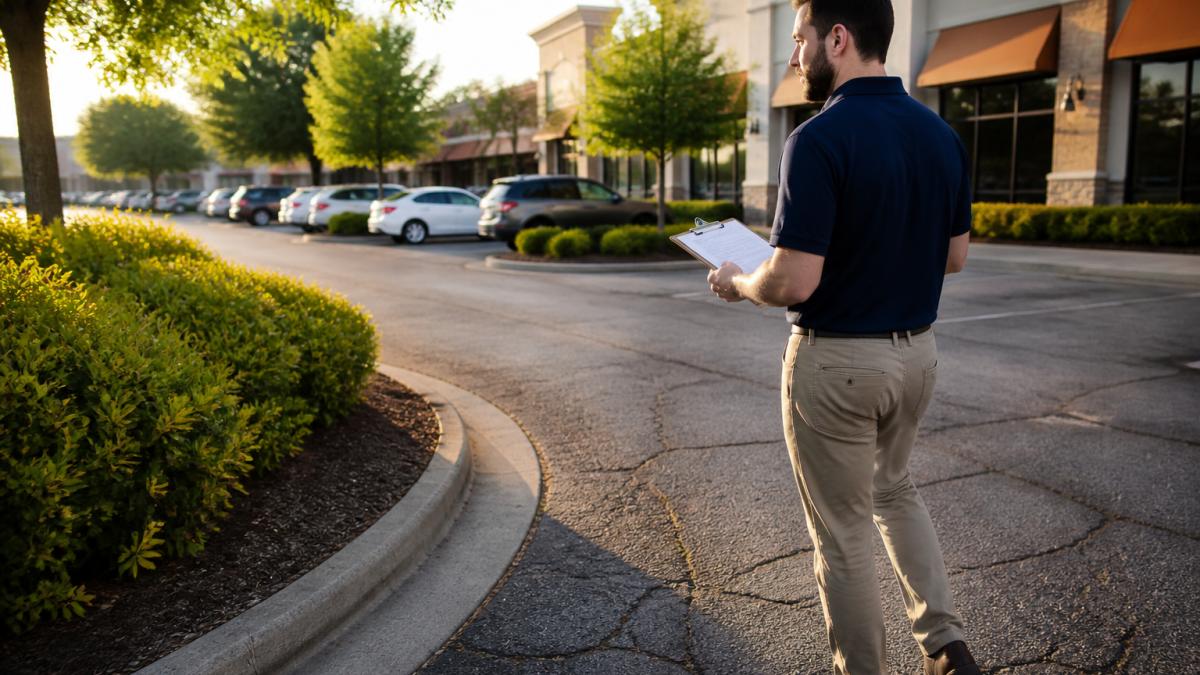
Before building a cleaning plan, assess your property's specific characteristics. A 5,000-square-foot office building needs a different strategy than a 50,000-square-foot shopping center, and 200 daily visitors create different priorities than 2,000.
Property Size and Layout
Map total square footage and identify distinct zones, parking areas, building exteriors, entry lobbies, common hallways, restrooms, and possibly loading zones or outdoor seating.
Large properties benefit from zone-based assignments: divide the parking lot into quadrants and assign specific quadrants to specific days for consistent coverage and easier tracking.
Document your building's materials: concrete needs different treatment than asphalt, stucco needs different pressure settings than brick, and tile lobbies carry different slip-and-fall risks than polished concrete.
Occupancy and Traffic Patterns
High-traffic areas accumulate dirt, debris, and moisture faster than low-traffic zones.
Occupancy patterns also determine frequency: 9-to-5 office tenants generate different needs than a 24-hour facility or retail property with evening and weekend traffic.
Seasonal variations matter too, retail surges during holidays, offices peak in business season, and industrial facilities may run different shifts. Your customized cleaning plan should account for these fluctuations.
Materials and Surface Conditions
Different surfaces respond to different methods: pressure washing works on concrete and asphalt but can damage painted surfaces, while soft washing protects stucco and certain wood finishes.
Existing conditions inform your plan: new concrete handles aggressive pressure washing, aging or cracked concrete needs gentler treatment, and surfaces with stains or algae may need specialized chemicals first.
Document problem areas, spots where water pools, zones prone to mold or mildew, or areas that collect debris.
Building Your Commercial Property Cleaning Schedule
A commercial cleaning schedule organizes tasks by frequency: daily, weekly, and monthly, ensuring nothing falls through the cracks while preventing over-cleaning.
Daily Cleaning Tasks
Daily tasks target high-traffic areas and visible dirt between deeper cleanings.
Daily tasks typically include:
- Sweeping parking lot entries and main walkways to remove loose debris
- Emptying trash receptacles and replacing liners
- Spot-cleaning visible spills or debris in lobbies and common areas
- Wiping down door handles and high-touch surfaces
Daily cleaning keeps small problems from becoming eyesores: a lot swept daily maintains its appearance, and clean lobbies signal active management.
For high-traffic properties, daily cleaning may focus on specific zones, a shopping center might sweep main parking areas and entries daily while rotating secondary areas weekly.
Weekly Cleaning Tasks
Weekly tasks go deeper, addressing areas that accumulate dirt over several days.
Weekly tasks typically include:
- Pressure washing parking lot sections (rotating through quadrants)
- Deep cleaning building entries and lobbies
- Washing windows and glass doors
- Cleaning and treating exterior walls or siding
Weekly cleaning prevents buildup that leads to permanent staining, reduces slip-and-fall risks, and projects professionalism.

Tomicic's Pressure Washing & Sweeping offers tailored weekly schedules that rotate through your property's zones systematically, ensuring comprehensive coverage without overwhelming your budget.
Monthly Deep Cleaning Tasks
Monthly tasks address areas needing intensive or less frequent attention, restoring surfaces and preventing long-term deterioration.
Monthly tasks typically include:
- Deep pressure washing of parking lot surfaces to remove stubborn stains
- Cleaning and treating exterior walls with appropriate chemicals
- Removing graffiti or addressing staining issues
- Cleaning gutters, downspouts, and drainage areas
Monthly deep cleaning prevents small problems from becoming expensive repairs: stains stay manageable, graffiti doesn't set in, and mold doesn't spread.
Seasonal variations may adjust your monthly schedule, more frequent debris removal in winter, mold prevention in spring, algae treatment in shaded areas in summer.
| Task Frequency | Primary Focus | Typical Tasks | Best For |
|---|---|---|---|
| Daily | High-traffic visibility | Sweeping, debris removal, spill response | Maintaining appearance, preventing hazards |
| Weekly | Systematic coverage | Pressure washing sections, entry cleaning, window washing | Consistent maintenance, preventing buildup |
| Monthly | Deep restoration | Stain removal, graffiti treatment, mold prevention | Long-term surface protection, addressing stubborn issues |
Commercial Exterior Cleaning Checklist for Different Property Types
Different property types face different cleaning challenges. A customized cleaning plan must account for your specific property category.
Shopping Centers and Retail Properties
Shopping centers present unique cleaning demands. Customer-facing areas require constant attention. Parking lots accumulate both vehicle-related debris (oil, tire marks, salt residue) and customer-generated litter.
Shopping center cleaning priorities include:
- Parking lot sweeping and pressure washing (high-traffic areas daily, full lot weekly)
- Entry vestibule and lobby cleaning (daily deep cleaning)
- Storefront window and glass cleaning (weekly)
- Exterior wall and siding treatment (monthly or as needed)
Shopping centers benefit from zone-based cleaning assignments: divide the parking lot into sections, rotate through them systematically, assign specific team members to specific zones, and track completion with a digital checklist.

Office Buildings and Mixed-Use Properties
Office buildings and mixed-use properties require different priorities than retail spaces. Professional appearance is critical. Tenant satisfaction depends heavily on lobby and entry conditions.
Office building and mixed-use property cleaning priorities include:
- Building entry and lobby cleaning (daily deep cleaning)
- Parking garage sweeping and spot cleaning (daily)
- Exterior wall and window cleaning (monthly or quarterly)
- Pressure washing of parking surfaces (monthly rotation)
- Graffiti removal and preventive treatment (immediate response)
Mixed-use properties require coordination between office, retail, and residential spaces. Establish clear boundaries and assign specific teams to specific areas to prevent confusion and gaps.
Industrial Facilities and Multifamily Properties
Industrial facilities face contamination challenges retail and office properties don't: oil spills, chemical residue, and heavy debris require specialized treatment. Multifamily properties must balance common area maintenance with unit turnover.
Pergola, Patio Cover, BBQ Island Cover Cleaning →
Industrial facility and multifamily property cleaning priorities include:
- Parking lot and drive area sweeping (daily for active areas)
- Oil and chemical spill response (immediate, specialized equipment)
- Pressure washing of loading areas and equipment zones (weekly or as needed)
- Graffiti removal and preventive coating (immediate response)
- Debris removal and yard maintenance (daily or weekly depending on operations)
For multifamily properties, add:
- Common area lobby and entry cleaning (daily)
- Exterior stairwell and walkway cleaning (weekly)
- Dumpster area and trash zone maintenance (weekly)
- Parking lot spot cleaning and debris removal (daily)
- Unit turnover deep cleaning (between occupants)
Multifamily properties benefit from scheduled turnover cleaning: when a unit becomes vacant, comprehensive cleaning, including pressure washing of patios, prepares it for new occupants.
Parking Lot Sweeping Schedule and Maintenance
Parking lots are the first thing visitors see. A parking lot sweeping schedule is essential to any customized cleaning plan.
Weekly pressure washing addresses stains, oil marks, and embedded dirt.
Monthly deep cleaning targets stubborn stains and problem areas. Oil stains require specialized treatment.
Seasonal adjustments matter. Winter months may require more frequent sweeping due to debris from vehicles and weather.
Using a Commercial Cleaning Plan Template
A commercial cleaning plan template provides structure and ensures consistency. Your template should capture all the information needed to execute and verify cleaning activities.
Essential Elements to Include
A comprehensive commercial cleaning plan template includes:
- Property identification: Address, square footage, key contacts
- Zone or area breakdown: Specific sections with square footage for each
- Task list: Detailed description of what gets cleaned in each zone
- Frequency schedule: Daily, weekly, monthly, or seasonal tasks
- Responsible party: Who performs each task
A well-designed template becomes your operational document. Team members follow it consistently. Managers verify completion against it. Customers can reference it to understand what they're paying for.
Task Prioritization and Budget Allocation
Not all cleaning tasks carry equal importance. Prioritize based on liability risk, customer visibility, and property condition.
Tier 1 priorities (highest importance):
- High-traffic areas and customer-facing zones
- Areas with slip-and-fall risk (wet lobbies, debris-covered walkways)
- Graffiti removal and vandalism response
- Safety hazards (debris, spills, damaged surfaces)
Tier 2 priorities (moderate importance):
- Regular maintenance of parking lots and building exteriors
- Preventive treatment for mold and algae
- Landscape and curb maintenance
- Routine pressure washing on a rotating schedule
Tier 3 priorities (lower importance):
- Deep cleaning of less-visible areas
- Seasonal maintenance and treatments
- Cosmetic enhancements beyond basic maintenance
Budget allocation should reflect these priorities. Allocate the majority of your budget to Tier 1 activities. Tier 2 activities get consistent, reliable attention. Tier 3 activities happen when budget allows.
Consistent Tier 1 and Tier 2 maintenance prevents expensive Tier 3 problems: a parking lot maintained regularly doesn't need costly restoration, and graffiti removed immediately doesn't require specialized removal services later.
Quality Control and Measuring Plan Effectiveness
A customized cleaning plan only works if it's executed consistently and adjusted based on results.
Implement quality control by establishing clear standards for each task.
Document standards in your cleaning plan template.
Track completion daily or weekly using a checklist system.
Measure effectiveness by monitoring property condition over time. Are stains staying removed?
Adjust your plan quarterly based on results.
Seasonal adjustments also matter.
Implementing Your Customized Cleaning Plan
Successful implementation requires clear communication, consistent execution, and ongoing accountability.
Assign specific responsibilities. Designate a property manager or supervisor to oversee the plan's execution.
Use technology to track progress. Digital scheduling systems send reminders when tasks are due.
Conduct regular inspections. Walk the property yourself on a weekly or monthly basis.
Schedule quarterly plan reviews. Assess whether the current schedule is delivering results.
Frequently Asked Questions
What should a customized cleaning plan for a commercial property include?
A comprehensive customized cleaning plan should include a property assessment (size, occupancy, materials, condition), task categories by frequency (daily, weekly, monthly), specific cleaning methods for each area, scheduling and resource allocation, quality-control checkpoints, and budget details. The plan must account for your property type, whether it's a shopping center, office building, or industrial facility, and reflect high-traffic areas that need more frequent attention. Include contingency for seasonal deep cleaning and emergency cleanup needs.
How often should commercial property exteriors be cleaned?
Exterior cleaning frequency depends on property type, location, and traffic volume. Shopping centers and office buildings benefit from regular exterior maintenance. High-traffic areas, loading docks, and entryways require daily or twice-weekly cleaning. Industrial properties may need emergency cleanup services on-call. Climate and weather patterns also affect frequency, areas with heavy dust or moisture may need more frequent cleaning to prevent mold and grime buildup.
How do you create a cleaning schedule for a commercial property?
Start by assessing your specific property needs: measure square footage, identify traffic patterns, note material types (concrete, stucco, vinyl), and evaluate occupancy levels. Categorize tasks by frequency, daily (lobbies, restrooms), weekly (common areas, parking lots), and monthly (deep cleaning, pressure washing). Use a commercial cleaning plan template to document each task, assign responsibility, and set inspection standards. Build in flexibility for seasonal variations and emergency cleanups. Track completion rates to measure effectiveness and adjust the schedule based on real-world performance and tenant or customer feedback.
What are good daily, weekly, and monthly cleaning tasks for a property?
Daily tasks include trash removal, restroom sanitation, lobby sweeping, and entrance mat cleaning. Weekly tasks cover common area vacuuming, window cleaning, parking lot sweeping, and surface disinfection in high-traffic zones. Monthly deep cleaning includes pressure washing exterior surfaces, detailed bathroom scrubbing, carpet shampooing, and inspection of hard-to-reach areas. For properties with exterior spaces, regular pressure washing of outdoor surfaces maintains curb appeal and prevents deterioration. Adjust frequency based on property type, retail centers may need more frequent parking lot maintenance, while office buildings prioritize lobby and restroom upkeep.
How can property managers prioritize cleaning tasks within a budget?
Prioritize based on safety, compliance, and customer impact. High-traffic areas (lobbies, parking lots, entryways) should receive frequent attention to maintain safety and appearance. Next, address areas required for code compliance (restrooms, emergency exits, hazard zones). Then allocate remaining budget to maintenance cleaning that extends asset life, pressure washing, exterior care, and deep cleaning. Use a commercial cleaning plan template to track costs per task. Consider bundling services: exterior pressure washing can be scheduled quarterly rather than monthly to manage costs while maintaining professional appearance. Emergency cleanup services should be reserved for spills or unexpected events.
Which exterior cleaning services do shopping centers and parking lots need?
Shopping centers require regular parking lot sweeping and pressure washing of pave