

7 Ways to Prevent Parking Lot Slip and Fall Accidents
Last Updated: October 29, 2026
Quick Summary
Prevent a parking lot slip by fixing pavement defects taller than a coin edge, clearing ice, snow, standing water, leaves and spills quickly, and improving lighting. Run a written safety checklist weekly and after every storm, with each check assigned to a role and a measurable pass/fail threshold.
- Mark every uneven surface with chalk and repair any pavement defect taller than a coin edge.
- Treat any lip over 1/4 inch as a trip hazard and repair it within 7 days.
- Clear leaves weekly in fall because wet leaves are as slick as ice.
- Fix any lighting outage in a walking path within 3 business days.
- Name a single lot safety coordinator to receive all inspection and incident reports.
Table of Contents
- Why Parking Lot Slip and Fall Incidents Keep Happening
- Step 1: Fix Pavement Defects Before They Become Trip Hazards
- Step 2: Build a Parking Lot Safety Checklist for Regular Inspections
- Step 3: Manage Parking Lot Ice and Snow Removal Before Temperatures Drop
- Step 4: Solve Parking Lot Drainage and Standing Water Problems
- Step 5: Keep Up With Parking Lot Cleaning and Debris Removal
- Step 6: Improve Lighting and Visibility Across the Site
- Step 7: Document Incidents and Track Prevention Performance
- Frequently Asked Questions
Why Parking Lot Slip and Fall Incidents Keep Happening
A parking lot slip is one of the most common liability claims a commercial property faces, and most of them are preventable.
A crack widens. A drain clogs. A spill sits overnight. Then someone's shoe catches, and the property owner gets a claim.
The good news? Every step below is cheap compared to a single injury claim. Below, we will show you exactly how to prevent parking lot slip and fall accidents with a seven-step routine any property manager can run.
The Six Hazard Categories Behind Most Falls
A parking lot fall hazard is any physical condition on a walking surface that can cause a person to lose balance or traction. Nearly all of them fall into six groups:
- Pavement defects: cracks, potholes, and heaved slabs
- Weather hazards: ice, snow, and standing water
- Surface contamination: spills, oil, and debris
Watch out: most owners fix one category and ignore the rest. A clean lot with a cracked curb is still a trip hazard.
Step 1: Fix Pavement Defects Before They Become Trip Hazards
Walk your lot at a normal pace and mark every uneven surface with chalk. A pavement defect taller than a coin edge is a trip hazard worth repairing.
Rank defects by traffic. The path from the far rows to the main entrance matters more than a corner nobody parks in.
Then book the repair. Small fixes are cheap. A full slab replacement after a claim is not.
Step 2: Build a Parking Lot Safety Checklist for Regular Inspections
A parking lot safety checklist is a written list of conditions your team checks on a set schedule. It turns vague "looks fine" walkthroughs into a repeatable inspection. A prevention program works best when each check is assigned to a role, sets a measurable pass/fail threshold, and follows a year-round calendar. Readers planning ongoing service can use this practical guide to scheduling recurring shopping center cleaning.
Role-Based Inspection Assignments
Split the checklist by who can act fastest on each item:
- Property manager or facility lead: Weekly walkthrough of pavement, drainage, and lighting. Log defects in a shared tracker with a photo and location pin.
- Maintenance technician: Daily check of high-traffic walkways, entrance mats, and handrails. Fix or barricade hazards the same day.
- Landscaping or sweeping vendor: Report leaf accumulation, clogged drains, and oil stains during scheduled service visits. A written scope should require these reports.
A common failure is assigning every check to one person. When that person is out, inspections stop. Cross-train at least two people per role.
Measurable Pass/Fail Criteria
Replace subjective language with thresholds anyone can apply:
- Pavement elevation change: Any lip over 1/4 inch (about the thickness of a coin) is a trip hazard. Mark and repair within 7 days.
- Standing water: Any puddle remaining 24 hours after rain indicates a drainage problem. Investigate within 48 hours.
- Lighting: Any fixture out or flickering in a walking path is a priority repair. Fix within 3 business days.
These thresholds give you defensible documentation if a claim arises. "We inspect weekly" is weaker than "we inspected on this date, found this defect, and repaired it within this window."
Year-Round Inspection Calendar
Winter hazards get most of the attention, but prevention is seasonal:
- Spring: Inspect for heaving and cracks after freeze-thaw cycles. Clear winter sand and debris from drains. Check that sump pumps work.
- Summer: Look for heat-related pavement damage, oil staining, and overgrown landscaping that blocks sightlines. Verify irrigation does not overspray walkways.
- Fall: Clear leaves weekly from walking routes and drains. Wet leaves are as slick as ice. Check that exterior lighting works as daylight shortens.
- Winter: Pre-treat before freezes, salt and sand high-traffic routes first, and inspect for refreeze every morning. Pile snow away from drains and ramps.
Run the full checklist weekly and after every storm. To expand your checklist with exterior cleaning tasks tied to fall hazards, see what your commercial property exterior cleaning checklist should include. A seasonal calendar keeps you from fixing the same problem twice.
Accessible Route Checks
Add these items to every inspection:
- Curb ramps free of cracks, lips, and debris
- Accessible parking spaces and access aisles clear of carts and snow
- Handrails secure at stairs and ramps
- Walking surfaces stable for wheelchairs, walkers, and canes
A route that works for an able-bodied adult may fail for someone using a mobility device. Inspect the path from accessible parking to the entrance at least weekly.
Step 3: Manage Parking Lot Ice and Snow Removal Before Temperatures Drop
Parking lot ice and snow removal works best as a plan, not a scramble.
Snow removal should clear full walking routes, not just drive lanes. Pile snow away from drains and ramps so meltwater has somewhere to go.
Watch out: refreeze is the silent killer. Wet pavement at dusk becomes black ice by morning. Salt and sand again after any thaw.
When a spill or storm creates an urgent hazard, the business offers same-day services and 24/7 emergency call outs for commercial and industrial properties. Learn how to book same-day emergency cleanup service.
Step 4: Solve Parking Lot Drainage and Standing Water Problems
Parking lot drainage and standing water cause two problems at once: slick surfaces and faster pavement breakdown. Water sitting in low spots turns asphalt soft, and soft asphalt cracks.
Check these points monthly:
- Storm drains free of leaves and trash
- Grates and channel drains unclogged
- Ponding in low spots after rain
- Downspouts aimed away from walkways
Fix grading and drain issues with a contractor. Clear debris with routine sweeping. Water should be gone within a day of rain, not a week.
Step 5: Keep Up With Parking Lot Cleaning and Debris Removal
Parking lot cleaning and debris removal removes the everyday slip triggers: leaves, sand, wrappers, cart corral clutter, and oil drips.
Sweeping crew cleaning leaves and debris from a commercial parking lot with a property manager observing
A common mistake is cleaning only the entrance. Debris collects in the far rows and along curbs, exactly where people walk to their cars.
This is where routine service pays off. For a closer look at why this step matters, see why parking lot cleanliness matters.
Step 6: Improve Lighting and Visibility Across the Site
Poor lighting hides hazards and creates shadows that read as holes. Walk the lot after dark once a month and log every dark zone.
- Replace burned-out bulbs within days
- Trim trees blocking light fixtures
- Clean lenses and fixture covers
- Add lighting at stairs, ramps, and crosswalks
Good visibility also helps customers spot spills and ice before they step on them. It is one of the cheapest fall prevention tools you have.
Step 7: Document Incidents and Track Prevention Performance
When a fall happens, photograph the scene, document conditions, and file an incident report the same day. Note the weather, lighting, and surface condition at the time. This protects you and shows where prevention failed. But documentation is only half the job. The other half is coordinating across everyone who touches the lot, owners, tenants, contractors, and shared facilities, so hazards get fixed and stay fixed.
Contractor and Shared-Facility Coordination
Responsibility for a parking lot is often divided. The property owner may control pavement and lighting, a tenant may control cart corrals, and a maintenance vendor may control sweeping and snow removal.
Use a simple coordination workflow:
- Name a single lot safety coordinator. This person receives all inspection reports, incident reports, and vendor observations.
- Put reporting duties in every contract. Sweeping, landscaping, and snow-removal scopes should require vendors to report hazards they see, not just perform their task.
- Hold a monthly 15-minute review. Coordinator, maintenance lead, and a tenant representative review open hazards, repair status, and repeat problem areas.
- Document handoffs. If a hazard is on a tenant's pad or a shared drive aisle, record who accepted responsibility and the target repair date.
- Close the loop in writing. Every hazard gets a status: open, scheduled, repaired, or monitored. A hazard without a status is a hazard that will be forgotten.
For shared parking facilities, common in shopping centers and office parks, add a written cost-sharing agreement for pavement repairs and snow removal. Ambiguity about who pays delays repairs, and delayed repairs are where claims come from.
Track Prevention Performance
Measure whether your program works, not just whether inspections happen:
Measure |
Target |
Why It Matters |
|---|---|---|
Inspection completion rate |
95% or higher |
Shows the routine is real |
Repair response time |
Under 7 days |
Stops small defects growing |
Spill cleanup time |
Same day |
Removes slick surfaces fast |
Lighting outages fixed |
Under 3 days |
Keeps visibility high |
Repeat hazard locations |
Trending down |
Shows root causes are fixed |
Incident count |
Trending down |
Proves prevention works |
Review these numbers monthly with the coordinator and quarterly with ownership. A rising repeat-hazard count usually means a repair is temporary or a drainage problem is unresolved.
Incident Documentation Checklist
When a fall occurs, capture:
- Photos of the surface, lighting, and surrounding conditions
- Weather and temperature at the time
- Time of day and visibility conditions
- Names of witnesses and staff on duty
File the report the same day and route a copy to the lot safety coordinator. If the same hazard appears in two incident reports, treat it as a program failure, not bad luck.
If you want ongoing, tracked prevention instead of one-off fixes, explore tailored service packages for nearly any budget. Packages are tailored to fit specific budgets and needs.
Frequently Asked Questions
What is the most common hazard in a parking lot?
Uneven pavement is the most frequent parking lot hazard: cracks, potholes, and raised edges catch toes and roll ankles. Standing water, oil residue, loose gravel, and winter ice rank close behind. All of these are trip hazards or slip hazards that a regular inspection can catch early. Property managers should walk the lot weekly and log every pavement defect, spill, and drainage problem so small issues get repaired before a visitor is hurt.
How often should parking lots be inspected for hazards?
Walk the lot at least once a week and do a full documented inspection monthly. Increase frequency after heavy rain, snow, or high-traffic events. Winter weather calls for daily checks of walkways and entrances. Keep a parking lot safety checklist that covers pavement, lighting, drainage, signage, and debris, and record the date, findings, and repair response time. Consistent records show due diligence and help you spot recurring problem zones before they cause a slip and fall.
How can property managers prevent slips and falls in parking lots?
Prevention comes down to five habits: repair pavement defects quickly, remove ice and snow before foot traffic arrives, clear standing water and fix drainage, sweep debris and clean spills promptly, and keep lighting bright. Add clear hazard signage, document every inspection, and track incidents to see where problems repeat. A scheduled maintenance contract for parking lot cleaning and debris removal takes the guesswork out of the routine work so your team can focus on repairs and risk management.
What should a parking lot safety inspection include?
A thorough inspection covers walking surfaces, pavement cracks and potholes, drainage grates and ponding, lighting levels, signage, handrails at stairs, and debris or spills. Check accessible routes and curb ramps for mobility-device users. Photograph the scene of any defect and note its location. Record inspection frequency and repair response time so you can measure whether fixes happen fast enough. A written parking lot safety checklist keeps every inspection consistent across multiple properties.
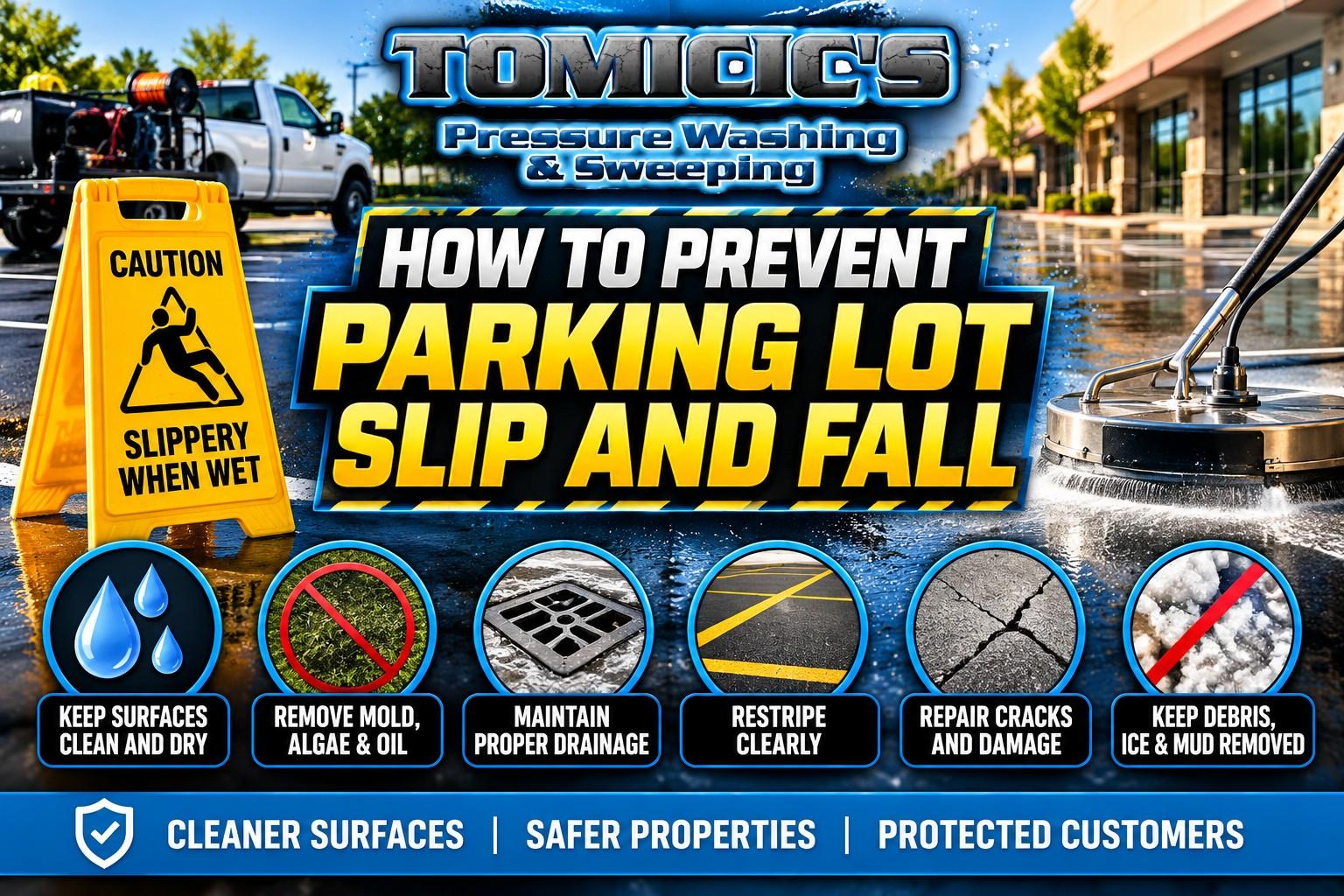
Preventing falls is a routine, not a repair project. If your lot needs a partner who shows up on schedule, Tomicic's Pressure Washing & Sweeping offers same-day service for urgent sweeping, 24/7 emergency call outs, and tailored packages for nearly any budget. Get started with Tomicic's Pressure Washing & Sweeping and request a free estimate to build a safer lot this month.
